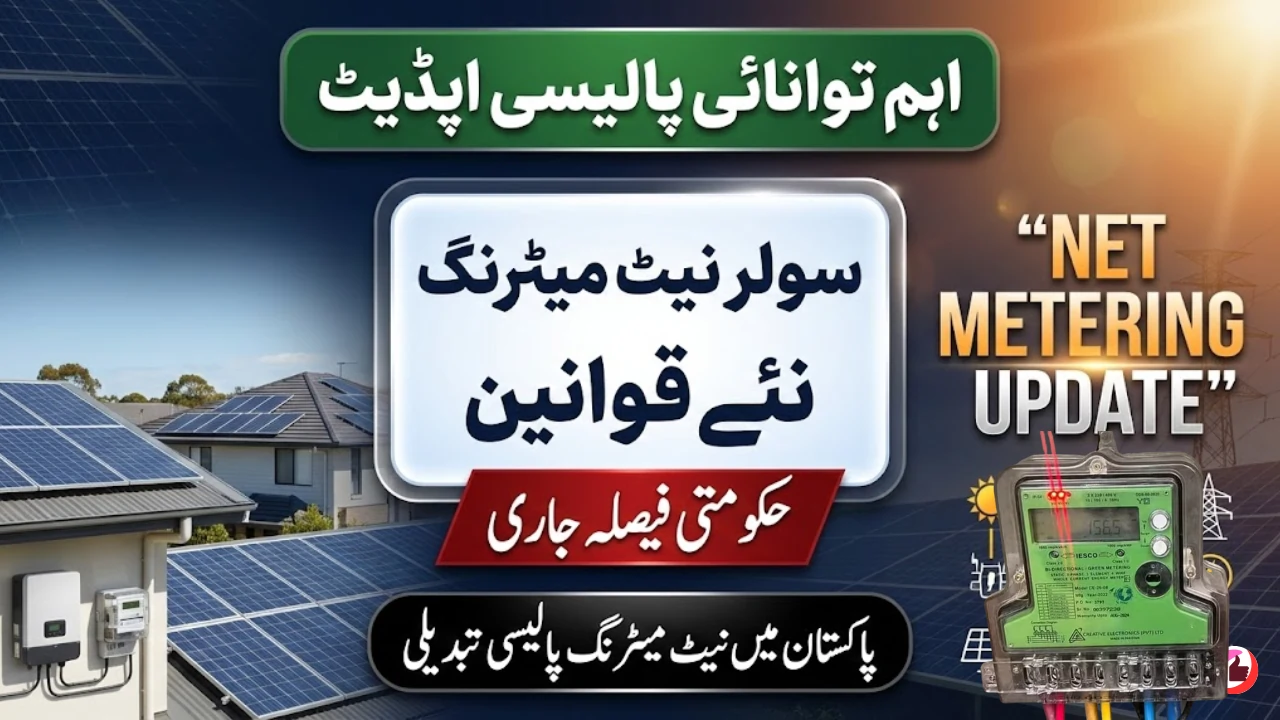
Pakistan’s solar community is on high alert as the government moves toward major changes in the solar net metering system. The new Prosumer Regulations 2025–26, now under final review, are expected to reshape how households and businesses earn from rooftop solar systems.
Below is a clear, easy-to-read, and fully updated breakdown of what’s changing, who will be affected, and what solar users should expect next.
What Is the New Solar Net Metering Policy About?
Pakistan is gradually shifting from Net Metering to a Net Billing (Gross Metering) system. The purpose is to reduce pressure on the national grid and cover a huge revenue gap of around Rs. 159 billion, mainly caused by higher solar exports at subsidized rates.
Under the updated rules, solar users will no longer enjoy one-to-one unit adjustments with the grid.
Key Changes Introduced in Solar Policy 2026
Reduced Solar Buyback Rate
The government plans to slash the solar export rate:
-
Old rate: Rs. 26–27 per unit
-
New proposed rate: Rs. 11.30–13 per unit
This new rate is linked to the National Average Energy Purchase Price, which is significantly lower than consumer tariffs.

End of One-Unit-for-One-Unit System
Previously, exported solar units were adjusted against imported units.
Now:
-
Grid electricity will be billed at full national tariff
-
Solar exports will be credited separately at a lower fixed rate
This change alone will significantly impact monthly savings.
Solar System Size Limit Reduced
New solar connections will be restricted to:
-
100% of sanctioned load
Previously, users were allowed systems up to 150%, giving them higher export capacity.
Shorter License Duration
-
Old contract period: 7 years
-
New contract period: 5 years
Renewals will depend on mutual agreement, not automatic extension.

Mandatory Licensing for All Solar Systems
Now, every solar installation, including those below 25 kW, must obtain a generation license from NEPRA.
Earlier, small systems were exempt.
Eligibility Under the New Rules
-
New applicants must comply with load limits
-
Mandatory NEPRA licensing required
-
Agreement valid for 5 years only
-
Export rates fixed under net billing model
Benefits of the Updated Policy
-
Reduced financial burden on non-solar consumers
-
Better grid stability
-
Transparent billing mechanism
-
Standardized solar capacity planning

Limitations and Challenges
-
Lower return on solar investment
-
Longer payback period
-
Additional licensing steps
-
Possible monthly grid maintenance charges

Impact on Existing Solar Users
Existing Users Will Remain Protected
Solar consumers with valid 7-year agreements will continue enjoying:
-
Current export rates
-
Net metering benefits
until their contracts expire.
Higher Winter Electricity Bills Expected
During winter:
-
Solar generation drops
-
Heating demand increases
This means more grid usage and higher bills, especially for businesses.
Solar Payback Period Will Increase
Experts estimate:

-
Old recovery time: 2 years
-
New recovery time: 5 to 9 years, depending on usage
Latest DISCO-Wise Updates (Jan–Feb 2026)
| DISCO | Latest Update |
|---|---|
| LESCO | Export rate adjusted to Rs. 25.32/unit for existing users |
| All DISCOs | Reports of Rs. 900 monthly grid fee under review |
Is solar net metering completely ending in Pakistan?
No, net metering is not ending, but it is being replaced with a net billing system for new users.
Will old solar users be affected by new rates?
No, existing users will continue under their signed agreements until expiry.
Is NEPRA license mandatory for small solar systems now?
Yes, under the new rules, all systems—regardless of size—require licensing.
Will solar still be profitable after 2026?
Yes, but savings will be lower and recovery time will be longer than before.
Final Takeaway
Pakistan’s updated solar net metering policy marks a major shift in energy planning. While solar remains a smart long-term option, new users must carefully calculate costs, expected savings, and licensing requirements before investing. Staying informed and acting early will be the key to maximizing benefits under the new rules.
Latest Updates